
Our History
Celebrating our heritage.
Shaping Landscapes and Professional Excellence Across Decades
IFLA Europe was established on 4 April 1989 as the European Foundation for Landscape Architecture in order to specifically address European landscape architectural educational and professional issues. It was formed by representatives of 12 National Associations – Belgium, Denmark, France, Germany, Italy, Luxembourg, The Netherlands, Portugal, Spain, United Kingdom, plus Ireland and Greece whose representatives were not present at the meeting.
Today IFLA Europe has 34 members and represents more than 20.000 landscape architects across Europe!
1900 – 1939
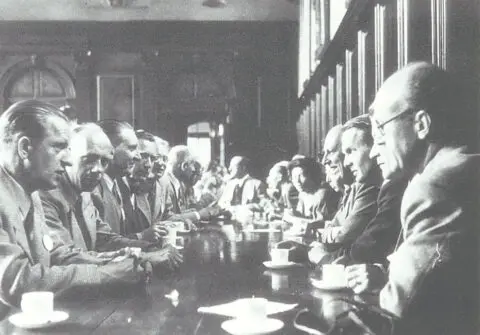
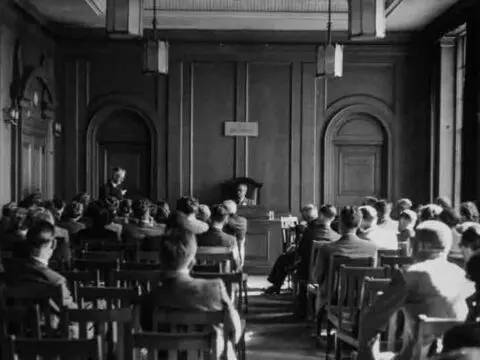
This formative period saw the establishment of professional bodies for landscape architects across Europe and beyond, marking the emergence of the profession in many countries. These organisations introduced essential frameworks for education and practice, helping to set standards and ensure quality. Strong partnerships developed between professional bodies and universities, with educational programmes closely aligned to the needs and expectations of the profession, laying the foundation for excellence in landscape architecture.
1948
In 1948 the International Federation of Landscape Architects (IFLA) was founded in Cambridge, England with Sir Geoffrey Jellicoe as its first President. It represented 15 states from Europe and North America. Later, in 1978, the IFLA’s headquarters were established in Versailles, France. The present headquarters of IFLA are in France. IFLA currently represents 76 member professional associations from Africa, the Americas, Europe, Middle East and Asia Pacific.
1965
In 1965, IFLA was first admitted to “Category C” of the United Nations Education, Scientific and Cultural Organisation (UNESCO). In 1970 IFLA advanced to “Category B”. Finally, in 1987, after many years of discussion with UNESCO and after intensive collaboration, especially with the Division of Cultural Heritage, IFLA was admitted to “Category A”, thus achieving an important landmark for the profession. In July 2012 the IFLA/UNESCO Charter was agreed for landscape architecture education.
1968
In 1968, the profession of landscape architect was officially recognised by the International Labour Organisation (ILO) in Geneva in a chapter entitled “Architects and Town Planners”. In the most recent edition of ISCO (International Standard Classification of Occupations), landscape architects are classed in group 2162, next to Building Architects in group 2161.
1987
On 29 August 1987, the International Federation of Landscape Architects (IFLA) was admitted by UNESCO as a non-governmental organisation (NGO) with an official working relationship with UNESCO.
1989
In response to changes in European legislation on professional qualifications in 1987, national landscape architecture associations united to harmonise training and practice, leading to the creation of the European Foundation for Landscape Architecture (EFLA) in 1989. EFLA fostered collaboration with universities, students, and affiliated organisations, establishing standards for professional education and supporting recognised schools.
2000
In the early 2000s, EFLA became IFLA Europe, the European region of the International Federation of Landscape Architects, inheriting its legal status and expanding its membership to 34 national organisations. Today, IFLA Europe represents the profession across the continent, actively collaborates with the Council of Europe, and champions landscape quality through policy engagement, educational excellence, and thematic resolutions that encourage dialogue and action for landscapes at both European and community levels.
2018
A charter was agreed and adopted by IFLA Europe’s General Assembly at its meeting in London on 9 September 2018. This Charter not only brings together in a single document the details of the organisation and the governance of the body, but also the core requirements for professional training, including reference to the School Recognition Panel, public and private practice, the responsibilities of liberal professionals, intellectual property, professional independence and probity, and also states the organisation’s close reference to the objectives of the European Landscape Convention.